
Rosh Hashanah
A COSMIC OPPORTUNITY TO BEGIN AGAIN
What is Rosh Hashanah?
Rosh Hashanah is traditionally thought of as the Jewish New Year and literally means "head of the year". However, the Torah specifically calls for the holiday to begin on the 1st day Tishrei, the 7th month of the year.
If we dig a little deeper, Jewish tradition teaches that Rosh Hashanah commemorates the creation of Adam and Eve on the sixth day of Creation - the birth of humanity.
This anniversary of creation gives us an opportunity to connect to that original, clean and unblemished state, before human actions created negativity that could block us from the endless Light, prosperity and blessings of the creator. And because the creation of humanity occurred before the establishment of Judaism, Christianity or Islam, we can understand Rosh Hashanah ias more than just a Jewish holiday. From a Kabbalistic perspective, it represents a cosmic window in time with energy and wisdom available to all humanity.
Similar to the secular New Year, when we make personal resolutions for change, a deeper purpose of Rosh Hashanah holiday is to return to the original state of creation and make a fresh start for a new and "sweet" year.
By using a variety of ancient, yet spiritually high-tech tools, we have an opportunity to cleanse negativity accumulated through our prior actions and begin again. The Zohar states that on Rosh Hashanah, the world goes back to the energetic state of the original day of creation. Our job to prepare ourselves for the restart.
The connection between Rosh Hashanah and creation can also be seen through a Kabbalistic interpretation of the Torah's first word, Bereshit, meaning "in the beginning". Its Hebrew letters can be rearranged to form "B'Aleph Tishrei", on the first of Tishrei, - the day on which we celebrate Rosh Hashanah.
How Do We Celebrate?
Pre-Holiday Preparation
While Rosh Hashanah falls on the 1st and 2nd day of Tishrei, our preparation begins the preceding month of Elul (Virgo), when we enter a period of self-reflection and begin the process known as Teshuvah - commonly translated as repentance, but more literally meaning "to return".. This process helps us return to our original state.
Tradition teaches that Rosh Hashanah is the "Day of Judgment", when our actions from the prior year are brought before us. There is no "man in the sky" judging and punishing us, but rather, it is our own actions throughout the prior year, that lead to any judgmental effects we are to experience in our lives.
Through preparation, Teshuvah and the spiritual connections of Rosh Hashaanh, we have an opportunity to address those causes, cleanse negativity and prepare our vessel to receiv greater Light and blessing in the coming year.
Teshuvah: Our words have energy.
Throughout the year, each of us says we are going to do things that we ultimately do not do. Sometimes these are formal commitments; other times they may simply reflect the promises and intentions we make to ourselves and others.
Kabbalah teaches that words create spiritual energy. When we make commitments and fail to fulfill them, we can leave unfinished spiritual business behind us.
Before Rosh Hashanah, there is therefore a traditional process called Hatarat Nedarim - the annulment of vows. Through a specific declaration before a tribunal of three people, we ask to be released from certain unfulfilled vows and commitments from the prior year. The larger lesson is that our words matter.
As we enter a new year, we should become more conscious of what we promise, what we say and the energy our words create.
Here is a link to the specific process:
https://opensiddur.org/prayers/life-cycle/living/repenting-resetting-forgiveness/hatarat-nedarim-the-release-of-vows-by-reb-zalman-schachter-shalomi/
Holiday Connection
By becoming aware of and connecting to the inner or hidden meaning behind the rituals of Rosh Hashanah, we can elevate our consciousness and move closer to the clean and unblemished state we desire.
Festive Meal - Sharing a festive meal with friends, family and loved ones connects us to unity, abundance and the type of year we hope to create.Rosh Hashanah also includes a variety of symbolic foods that help us connect our consciousness to specific energies for the coming year.
Dates - The Hebrew word for date is Tamar. Through its linguistic associations, we connect to dates with the intention of ending bitterness from the prior year and transforming it into sweetness.
Leeks - The Hebrew word Karti is connected to the idea of “cutting off.” We connect to leeks with the consciousness of cutting off negative forces and patterns from our lives.
Beets - The Hebrew word Selek is associated with removal. We connect to beets with the intention of removing negativity and obstacles from the year ahead.
Black-eyed Peas - Rubiya is associated with increase and abundance. We connect to them with the consciousness of increasing our merits and blessings.
Gourd - The word Kara can be associated with tearing. We connect to the gourd with the intention of tearing away negative decrees and judgments.
Pomegranate - With its abundance of seeds, the pomegranate traditionally represents the 613 mitzvot and our desire to fill the coming year with positive actions and good deeds.
Lamb / Fish Head - Rosh Hashanah means the “head of the year.” By connecting to the head rather than the tail, we set the intention to become the cause of what happens in our lives rather than simply living at the effect of our circumstances.
Apples and Honey - Perhaps the most widely recognized symbols of Rosh Hashanah are apples and honey.From a Kabbalistic perspective, the apple represents wholeness and balance. Its red exterior can be associated with the left-column energy of judgment, its white interior with the right-column energy of mercy, and its potential green coloring with the central-column energy of balance.
We then dip this symbol of balance and wholeness into honey, connecting our consciousness to a year filled with sweetness, mercy and blessing.
Prayer - The Rosh Hashanah prayers and Torah readings are not simply words to recite. They are spiritual connections designed to elevate our consciousness and connect us to higher levels of Light.Understanding what we are doing transforms prayer from ritual into technology.
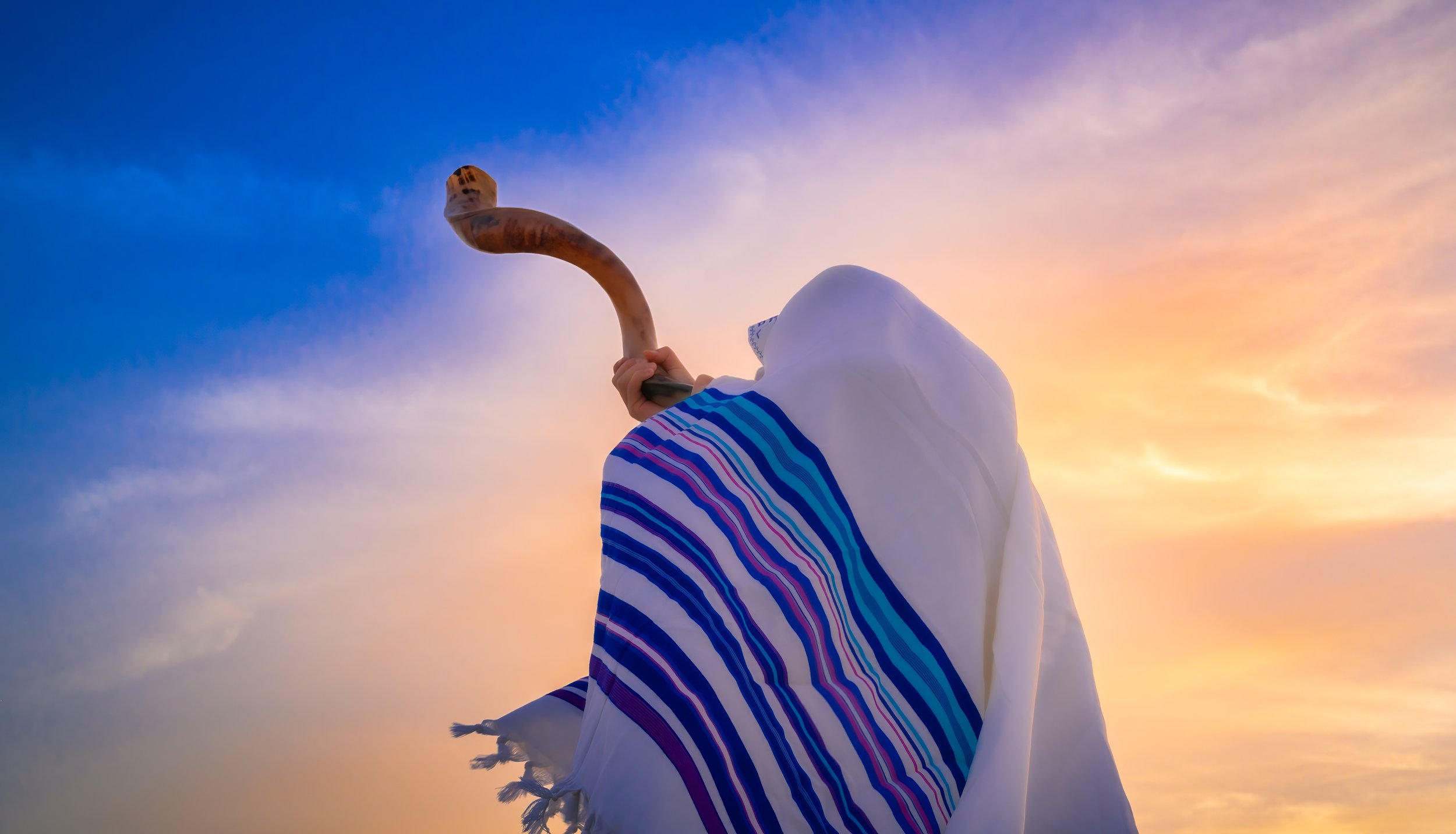
Shofar - One of the most powerful and recognizable tools of Rosh Hashanah is the blowing of the Shofar, a ram’s horn.The Shofar connects us to the ram in the story of the Akeidah - the binding of Isaac - and to Abraham’s extraordinary certainty and willingness to surrender his ego and personal understanding to something greater than himself. During the Rosh Hashanah prayers, it is customary in many communities to hear 100 blasts of the Shofar.
The three primary sounds - Tekiah, Shevarim and Teruah - can also be understood through the Kabbalistic system of the three columns: Chesed or mercy, Gevurah or judgment, and Tiferet, the central column of balance.
The sound of the Shofar goes beyond words and language. Kabbalists think of it as a kind of spiritual laser, penetrating places our intellect cannot reach and helping break through the judgments and negativity created by our prior actions.
We do not simply listen to the Shofar.
We use it to wake ourselves up.
Tashlich - Tashlich means “casting off” and is traditionally performed near a body of flowing water, generally on the first day of Rosh Hashanah.
Through prayer and contemplation, we symbolically cast away the negative actions, patterns and energy accumulated during the prior year.The important part is not the physical act. It is the consciousness behind it.
What are you ready to leave behind?
What anger, jealousy, fear, judgment, resentment or limiting behavior do you no longer want to carry into the new year?
Rosh Hashanah gives us an opportunity to let it go.
Practical Tools for the Holiday
1. Rewind Your Movie - Take 10 quiet minutes before Rosh Hashanah and mentally rewind the past year. Identify three moments when you reacted from anger, ego, judgment, jealousy or fear. Don't beat yourself up over them. Instead, ask yourself: “How would the higher version of me have responded?”
Visualize yourself making that different choice and inject Light into the moment. Then let it go.
2. Choose What You Are Leaving Behind - Before the holiday, write down one behavior, resentment, fear or limiting pattern you do not want to carry into the new year. Be specific.
During Tashlich—or simply during a quiet moment of reflection—make a conscious decision to release it. The purpose is not simply to wish it away, but to stop giving it your energy.
3. Become the Cause - Rosh Hashanah is the “head” of the year. Choose one area of your life where you have been living at the effect of circumstances - your relationships, work, health, spirituality or personal growth. Ask yourself:
“What can I do differently this year to become the cause?”
Choose one specific action and begin. A new year does not change our lives by itself. A new consciousness can.
Use these tools and the deeper wisdom behind the holiday to create a powerful Rosh Hashanah connection and a year filled with greater Light, sweetness and blessing.
Shanah Tovah!
Resources & Credits
The Holiday Wisdom emails and the ideas presented herein are compiled from the following sources:
Gutnick Edition Chumash with Rashi's commentary, Targum Onkelos, and commentary anthologized from Classic Rabbinic Texts and the works of the Lubavitcher Rebbe
Apples from the Orchard - Gleanings from the Mystical Teachings of Rabbi Yitzchak Luria on the Weekly Torah Portion
Kabbalistic Bible - Kabbalah Centre International, Inc
Chabad.org
LiveKabbalah.org
The Zohar - Rabbi Shimon Bar Yochai, various translations
Mysteries of the Kabbalah - Marc-Alain Ouaknin
Other online written and video content that discusses and shares Kabbalistic Wisdom