
Korach
The Rebellion
He Took
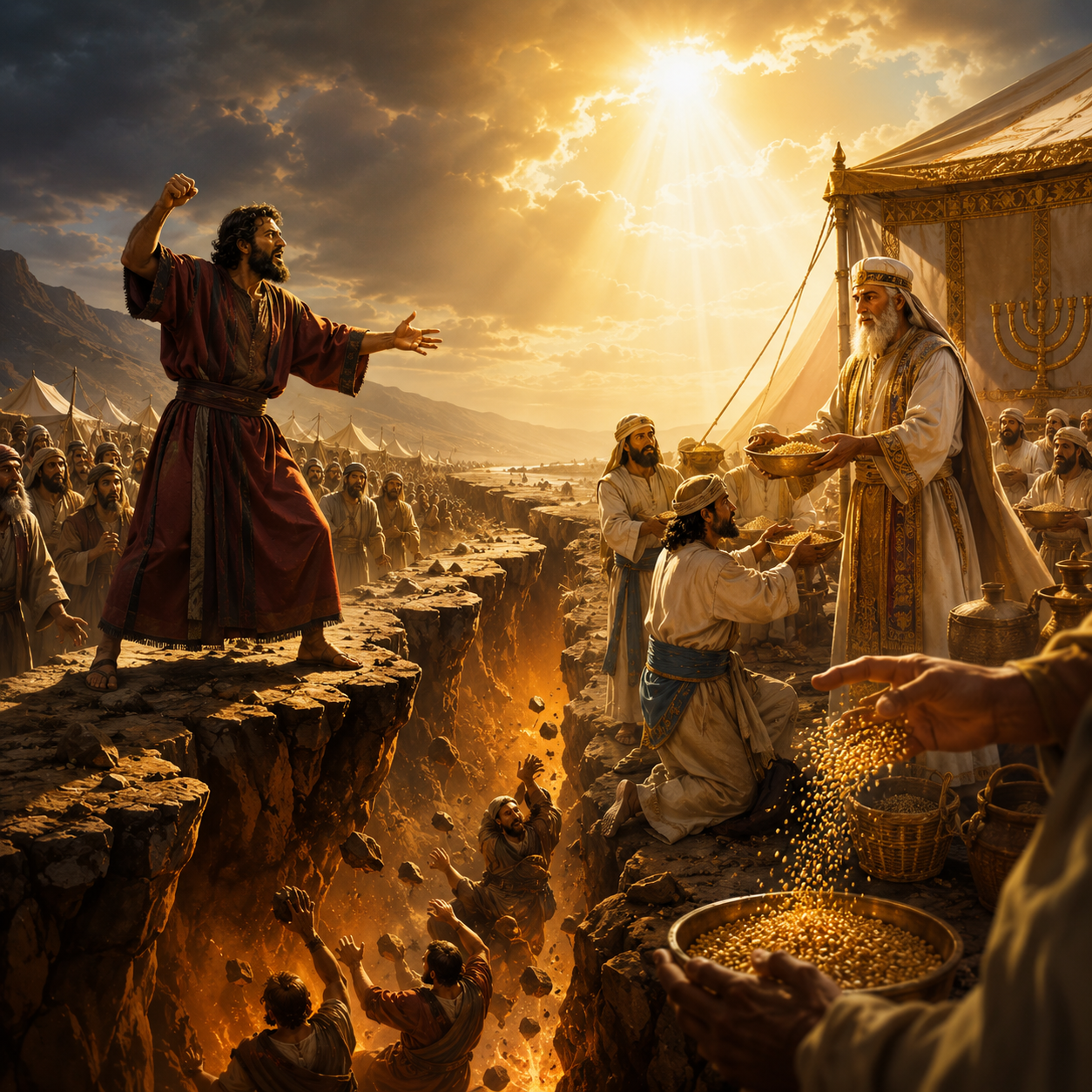
This week’s Torah portion is primarily focused on Korach’s rebellion against Moses and Aaron and G-d’s subsequent reaction. The portion commences with the word “vayikach”, meaning “he took”. In spirituality, "giving" and "sharing" are pathways to greater Light and higher consciousness, while "taking" for oneself alone often leads to separation and darkness.
Specifically, we read how Korach was upset that Aaron and the Levites (the priestly caste), were “raised above the congregation”. Korach was jealous and wanted to “take” the role of priesthood for himself and his followers. He believed that since the path to G-d and Holiness was through elevating the mundane, he and his followers were capable of achieving this on their own and should not be required to give offerings to the priesthood for their service. Although his belief that holiness being found within the mundane was correct, his consciousness was rooted in ego, which ultimatelt created division among the people. Just because we are able to raise our consciousness while toiling in our day-to-day lives, we must always look to others that are fully immersed in their connection with G-d to help lead the way for us.
It is not enough to just be Holy or to just be mundane, we must have both elements present to reveal the greatest amount of Light. Korach, which means “bald spot” tried to create separation through two factions, where there was previously unity – similar to a bald spot that creates a separation within a person’s hair. As a result of creating this division, G-d created an opening in the earth which swallowed up Korach and his followers. The lesson here is to share, as opposed to take, and to create unity over division in all that we do and within all our relationships.
A Wife’s Influence
The Talmud states that Korach’s wife goaded him and encouraged him to take a stand against Moses – suggesting that Moses and Aaron were corrupt and were keeping the money given to the Levites for themselves. This teaches us that those closet to us have tremendous influence over our thoughts, decisions, and actions. They can elevate our consciousness or reinforce our ego.
Korach’s wife created negative thoughts which resulted in ruin, but she could have just as easily provided a positive influence for the benefit of Korach, his family and his followers. The lesson from the Gemara is that “[T]he wisdom of a wife can save a household”. We should be mindful of influences that encourage negativity, jealousy, or division, and seek out those that inspire growth, humility, and unity.
Power of Tithing
Following the death of Korach, G-d reconfirms Aaron and the Levites as the holy priests to conduct the service of the Tent of Meeting, distinct from the “common man”. They were empowered to keep charge of the Holy things within the Priesthood. The portion further describes how G-d provided a tithe to the Levites as an inheritance in return for their service and how the Levites were to make a “tithe of a tithe” to which they were to set it apart as a gift to G-d and give it to Aaron, the Kohen HaGadol or High Priest.
Two powerful lessons emerge from this teaching. First, we see the importance of making a tithe or giving away 10% of our earnings in money, time or gifts. By contributing 10% to a higher purpose we can bring protection and blessings to our lives and ensure continued prosperity. Second, the concept of making a tithe is so important that G-d instructs the Levites to also tithe from the tithe they receive from the community. This demonstrates the importance of tithing to an organization or person with similar consciousness – whereby the organization tithes from the gifts they receive. This on-going cycle of giving creates continuity and helps bring greater blessings and Light in the world.
Practical Tools For The Week
1. Pause Before You React
Before responding to a disagreement, ask yourself: Am I creating unity or division?
2. Check Your Motivation
Before taking action, ask: Am I sharing and contributing, or simply taking for myself?
3. Give Something Away
Share 10% of your time, resources, knowledge, or kindness with a higher purpose this week.
Resources & Credits
The Weekly Wisdom emails and the ideas presented herein are compiled from the following sources:
Gutnick Edition Chumash with Rashi's commentary, Targum Onkelos, and commentary anthologized from Classic Rabbinic Texts and the works of the Lubavitcher Rebbe
Apples from the Orchard - Gleanings from the Mystical Teachings of Rabbi Yitzchak Luria on the Weekly Torah Portion
Kabbalistic Bible - Kabbalah Centre International, Inc
The Zohar - Rabbi Shimon Bar Yochai, various translations
Mysteries of the Kabbalah - Marc-Alain Ouaknin
Wikipedia
Other online written and video content that discusses and shares Kabbalistic Wisdom